Why development organisations forget what they learn
Projects end, teams move on and the same mistakes return. Why knowledge management is the unglamorous plumbing of sustainable development.
October 19, 2026
Isaac Lemayian1 min read
Share
Most development organisations I have worked with or studied share a version of the same story. A project ends and the team moves on. Someone uploads the final report to a shared drive. Two years later, a new project starts in the same region and makes many of the same mistakes. Nobody did anything wrong. The organisation simply forgot.
That forgetting is exactly what knowledge management is meant to prevent. Yet it is one of the least understood parts of development work, so here is why I think it matters so much.
Information is not the same as knowledge
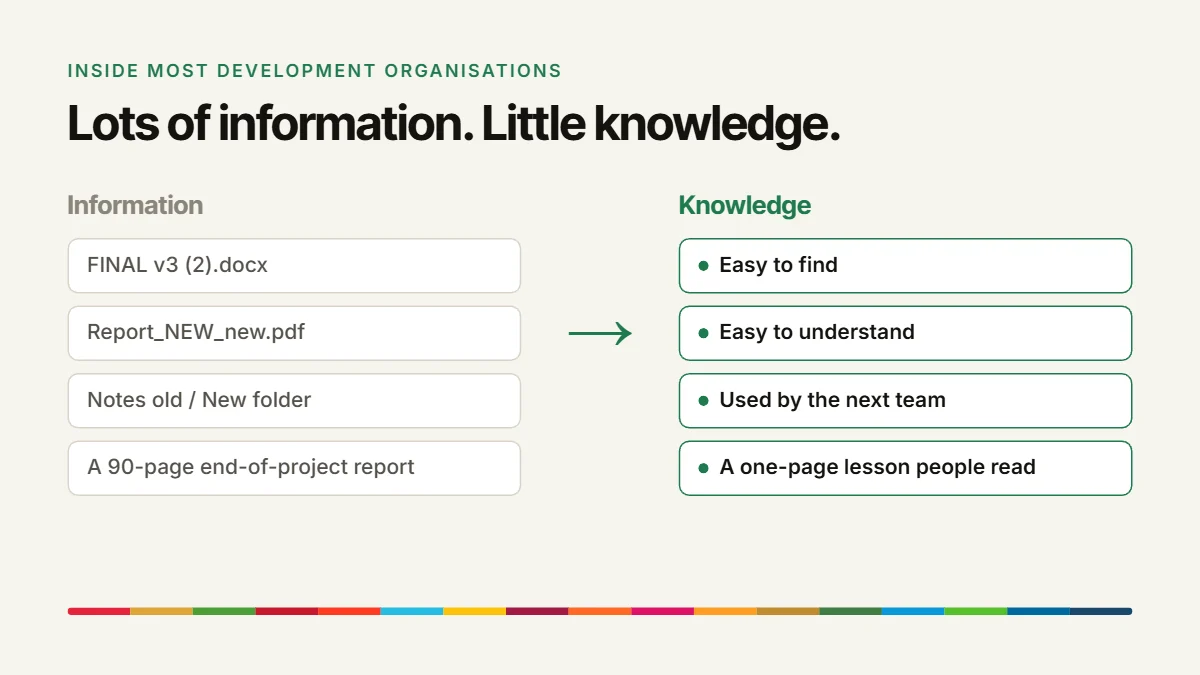
Most development organisations are drowning in information: reports, spreadsheets, meeting notes and shared drives full of folders called “FINAL v3 (2)”. What they often lack is knowledge, meaning information that someone can find, understand and act on when they need it.
Information is what we store. Knowledge is what the next team can actually use.
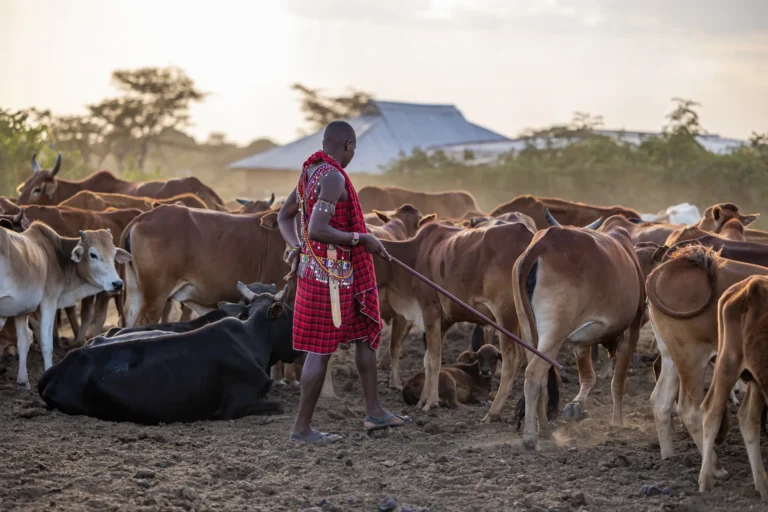
A field officer’s sense of which community leaders to speak to first is knowledge. So is an engineer’s note on why a water pump design failed in sandy soil. Neither usually makes it into a logframe. Still, both are worth more than many of the documents that do.
Why development organisations forget
This is not a new problem. Twenty years ago, an ODI review of international agencies found that most of them treated knowledge management as a technology project. They built a database, launched a portal and moved on. The tools arrived, but the habits stayed the same. Today, I still see that pattern almost everywhere.
From what I have seen, a few causes keep coming back:
Short projects, high turnover. Knowledge walks out of the door with people.
Reports written for donors, not for learning. They explain what we did, rarely what we learned or what we would do differently.
Failure feels risky to admit. As a result, the most useful lessons are often the ones nobody writes down.
Local knowledge gets ignored. Organisations often treat what communities already know as a story rather than as evidence.
What good knowledge management looks like in development organisations
The development organisations that get this right are not doing anything magical. When UNICEF Innocenti collected examples from nine agencies in Return on Knowledge, what stood out to me was how ordinary the winning habits are:
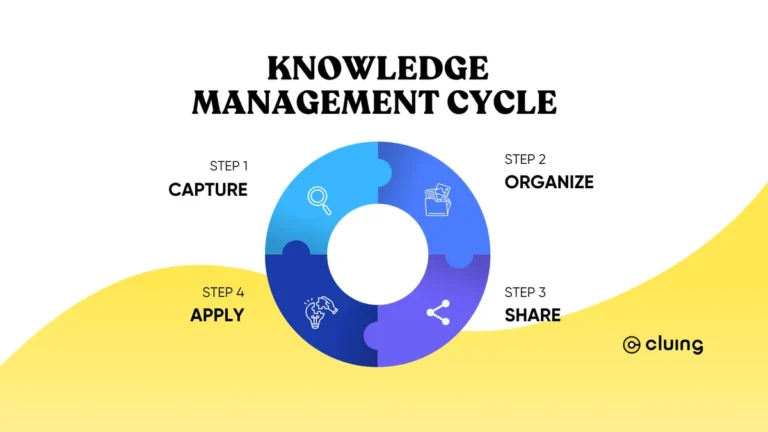
Pausing at the end of every phase to ask what worked, what did not, and why.
Writing short, readable lessons instead of long, exhaustive reports.
Connecting people who face similar problems, not just storing documents.
Making knowledge easy to find, with clear titles, sensible tags and pages people actually visit.
None of this needs expensive technology. Instead, it needs time, intention and leaders who treat learning as part of the work rather than an extra.
How digital tools help development organisations, and where they do not
I enjoy building digital systems for development organisations, so I am careful not to pretend technology is the answer. A beautiful knowledge portal that nobody contributes to is just a quieter shared drive.
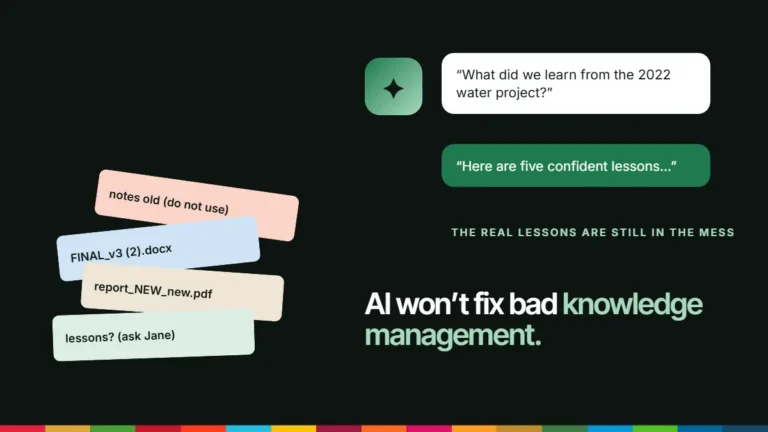
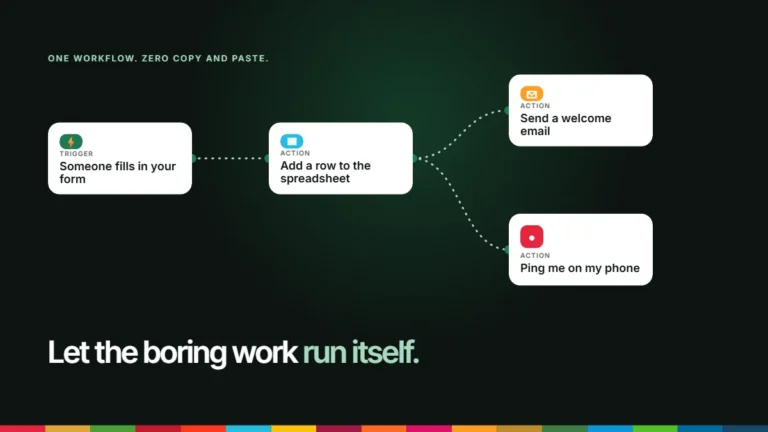
Where digital tools really help is in lowering the effort. For example, a simple template can turn writing a lesson into a ten-minute job instead of a day’s work. A good search actually finds things. An automation can remind a team to hold its review. AI can also summarise long reports or surface related work, but only if someone captured the knowledge honestly in the first place.
Why this matters for the SDGs
With only five years left to 2030 and less money for development, development organisations cannot afford to pay twice for the same lesson. Every time an organisation forgets what it learned, it spends scarce resources finding it again.
Knowledge management is not about documents. It is about making sure the next person starts where the last one finished.
That is the work I want to keep doing: making what we already know easier to find, share and use, so that good ideas travel further than the projects that produced them. You can see where this shows up in my research and on my global goals page. And if your organisation is wrestling with this, get in touch. I would love to help.
A letter from Nairobi in 2026, to grandchildren who may grow up among the stars, about the planet we had,...
Let’s talk
Ideas are better shared.
If this piece sparked a thought, a question or a disagreement, I’d love to hear it. I am open to conversations around sustainable development, knowledge and digital innovation.